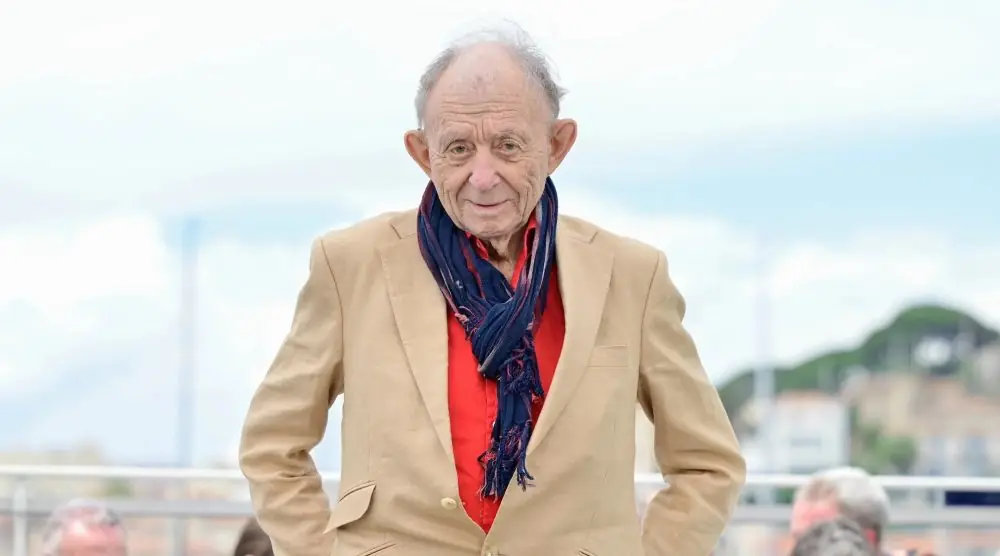
Legendary documentary filmmaker Frederick Wiseman (1930 – 2026) died Monday at his home in Cambridge, Massachusetts, at 96 years old. His family and his company, Zipporah Films, confirmed the news. He passed peacefully, leaving behind one of the most important bodies of work in American film history.
For more than six decades, Wiseman turned his camera on the places most people overlook. He filmed hospitals, schools, police departments, welfare offices, gyms, libraries, and city halls.
The Film That Shocked America
The film showed degrading treatment and raw human suffering without commentary or narration.
Massachusetts officials sued to ban the film. The state succeeded, and the documentary remained blocked from public view for decades. It became the only film in United States history censored for reasons other than obscenity or national security. The ban was lifted in 1991, and the film is now seen as a landmark in American cinema.
Wiseman rejected the label of ‘cinéma vérité,’ even though critics often used it. He believed his films were carefully shaped works of art. He shot hundreds of hours and then built a dramatic structure in the editing room. And he crafted stories out of daily life without adding narration to guide the viewer.
A Camera Inside American Institutions
After “Titicut Follies,” Wiseman kept going. He built a filmography that now reads like a portrait of America itself. His films carried plain titles that told you exactly where he had placed his camera.
In “High School” from 1968, he examined a Philadelphia school and the quiet pressure students faced. On the other hand, in “Law and Order” from 1969, he followed Kansas City police officers on the job. In “Welfare” from 1975, he recorded the tense exchanges inside a New York welfare office.
The icon’s approach continued for decades. In “Public Housing” from 1997, he spent time in a Chicago housing project. Plus, in “Domestic Violence” from 2001, he observed a shelter in Tampa. In “Boxing Gym” from 2010, he shifted to a community gym in Austin and found a quieter form of connection.
Critics compared his work to the great American novel. They saw his films as long, layered studies of national life. He showed how schools shape children, how police enforce order, and how government offices manage need.
The Art of Patience
The legendary documentarian worked with a tiny crew, usually just three people. He avoided heavy equipment and kept things simple.
After filming, he edited alone for months. He treated the editing room as a writing desk. He shaped scenes, built tension, and found rhythm. The result often ran long, sometimes very long.
His 1989 documentary “Near Death” runs nearly six hours. The film takes place inside a Boston hospital intensive care unit and follows conversations about life support and mortality. The length forces viewers to sit with hard choices and real-time decisions.
Wiseman never trimmed his films to fit trends. He once said he made them at whatever length felt right.
In later years, he returned to the United States with renewed energy. “In Jackson Heights,” from 2015, captured a diverse Queens neighborhood fighting change. “Ex Libris, The New York Public Library” from 2017 celebrated public knowledge and debate.
In “Monrovia, Indiana” (2018), he observed small-town life with a careful eye. In “City Hall” from 2020, he spent four and a half hours inside Boston’s city government. He followed meetings, speeches, and daily routines that shape policy in quiet ways.
His final documentary, “Menus Plaisirs, Les Troisgros” (2023), explored a renowned French restaurant. The film lingered on kitchens, dining rooms, and the labor behind elegance.